
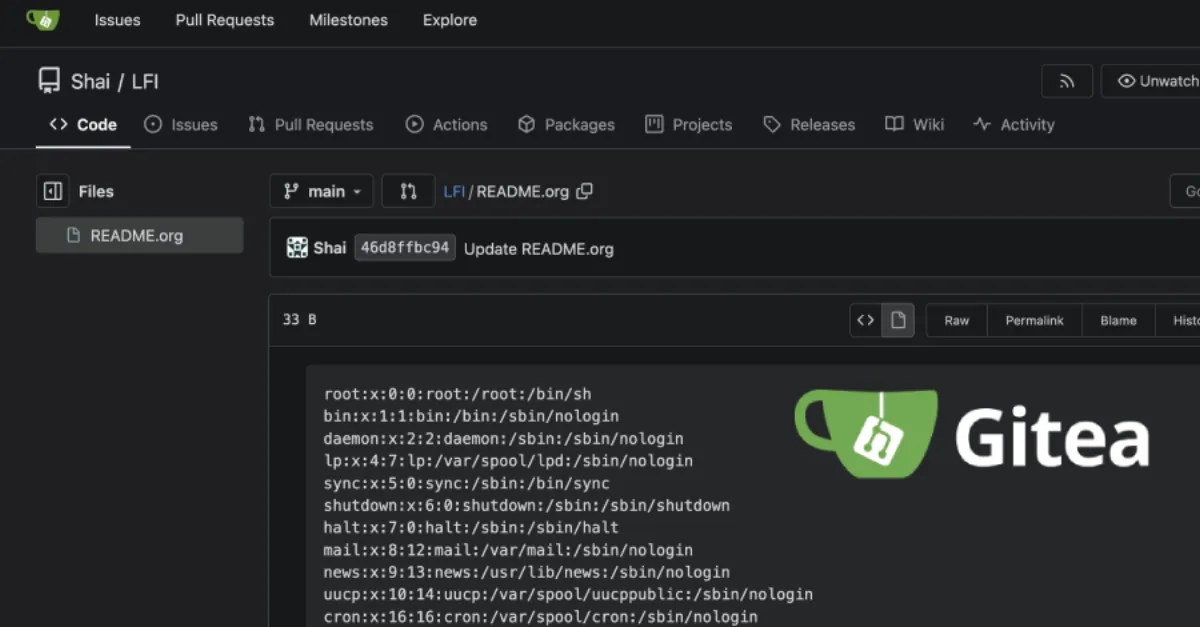
Severe Gitea Vulnerability Exposes Server Files to Remote Attackers Without Login
A critical flaw in Gitea's rendering of Org-Mode markup could allow an unauthenticated attacker to read sensitive files from the server, posing a serious risk to self-hosted repositories.
A newly disclosed security flaw in the popular self-hosted Git platform Gitea could allow unauthenticated attackers to siphon sensitive files directly from vulnerable servers. The vulnerability resides in the way Gitea processes Org-Mode markup, a plain text format for outlines, notes, and project planning. By crafting a malicious .org file, an attacker can exploit insufficient input validation to include arbitrary server files in the rendered view, such as configuration files, private keys, or user data.
The exploitation requires no prior authentication – anyone with network access to a vulnerable Gitea instance can trigger the flaw simply by uploading or pushing an .org file that contains specially crafted directives. When Gitea renders this file for display, the embedded commands coerce the server into reading and revealing the contents of targeted files, effectively bypassing access controls. This is particularly dangerous for organizations that host Gitea on the public internet or have weak network segmentation, as data breaches can occur without any credentials being compromised.
Gitea’s popularity as a lightweight, self-hosted alternative to platforms like GitHub makes it a common fixture in development environments, often holding proprietary source code, deployment scripts, and secrets. A successful exploit could expose not just the Gitea application itself but also the underlying operating system files, potentially leading to wider server compromise. The vulnerability has been rated critical, and the Gitea project has issued patches to address it.
Site owners and administrators should immediately upgrade to the latest patched version of Gitea. Additionally, restricting access to the Gitea web interface via IP whitelisting or VPN, and reviewing all .org file uploads for suspicious content, can reduce risk while patches are being applied. As with any self-hosted tool, regular security audits and prompt updates are essential. For teams that lack the resources to manage server hardening internally, services like AEU-I provide expert infrastructure assessments and consulting to lock down such applications against emerging threats.
How to Protect Yourself
- Update Gitea to the latest version as soon as the patch is released.
- Restrict who can reach your Gitea server by using a firewall or a private network (VPN).
- Look through your server’s access logs for any strange requests involving .org files.
- Turn on any built-in security settings in Gitea that limit file uploads or block harmful content.
- Create regular backups of your repositories so you can restore them if an attack succeeds.