
DeadLock Ransomware Taps Polygon Smart Contracts to Build an Almost Unstoppable Extortion Machine
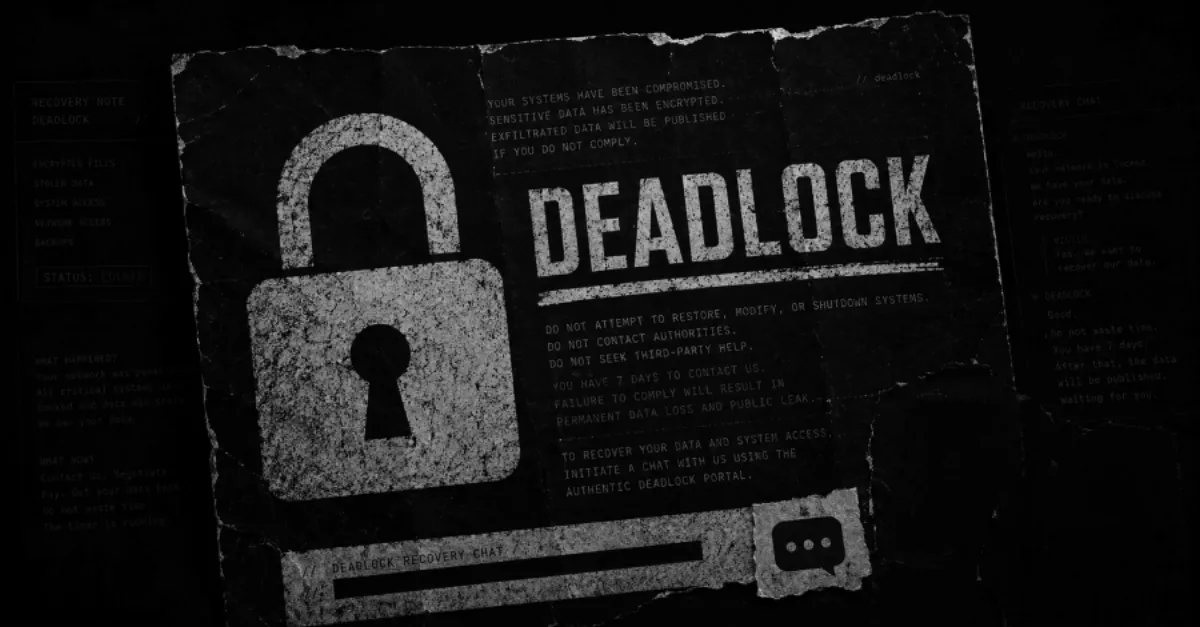
DeadLock ransomware is using self-executing blockchain programs on the Polygon network to automate ransom demands and create an extortion infrastructure that resists takedowns.
A ransomware operation known as DeadLock has adopted a sophisticated new tactic to make its extortion efforts far more difficult for law enforcement and security researchers to disrupt. Instead of relying on traditional command-and-control servers or leak sites hosted on the regular web, the group is embedding its criminal infrastructure into smart contracts on the Polygon blockchain. This move represents a significant escalation in the cat-and-mouse game between cybercriminals and defenders, and it carries serious implications for website owners and businesses who rely on the integrity of their digital assets.
Ransomware is a type of malicious software that locks up files or entire systems and demands payment, usually in cryptocurrency, to restore access. For years, most ransomware gangs have followed a predictable playbook: they would breach a network, encrypt data, and then use a mix of private servers, proxy services, and the anonymizing Tor network to host negotiation pages, leak samples, and process payments. These centralized, or at least semi-centralized, elements offer a choke point. Law enforcement agencies, working with cybersecurity companies, can seize servers, shut down domains, or apply pressure to hosting providers to take these operations offline. But DeadLock is changing the rules by moving the extortion logic itself onto a public blockchain.
Polygon is a secondary scaling solution built on top of the Ethereum blockchain, designed to make transactions faster and cheaper. A smart contract is essentially a small computer program that lives on a blockchain and automatically executes when certain conditions are met. Once deployed, a smart contract’s code and data become immutable—meaning they cannot be altered or removed by any single party, including those who created it. DeadLock is using these self-executing contracts to handle key parts of the ransom process. For example, a victim might be instructed to deposit cryptocurrency into a smart contract address. The contract could then verify the payment and automatically release a decryption key or interact with other on-chain elements, all without the attacker needing to maintain a live server that could be seized by authorities.
This strategy makes the extortion infrastructure drastically more resilient. There is no central point of failure to target; the blockchain is maintained by thousands of nodes around the world, and the smart contract will continue to function as long as the underlying network exists. Even if a court order compels a domain registrar to suspend a website or a hosting company to take a server offline, the smart contract remains untouched on the distributed ledger. For website owners and hosting providers, this means that ransomware attacks driven by such methods can become more persistent and harder to mitigate after the fact. The usual reactive measures—like blacklisting known malicious addresses—are less effective when the threat logic is embedded in a permanent, global system.
From the perspective of an online business or a website administrator, the rise of blockchain-powered ransomware underscores the absolute necessity of robust, layered defenses. Relying solely on traditional antivirus software or basic firewalls is no longer sufficient. Organizations must assume that a breach is a matter of when, not if, and prepare accordingly. This includes maintaining offline, regularly tested backups that are immune to encryption attacks, enforcing the principle of least privilege to limit the spread of malware, and applying security patches promptly. It also means choosing a hosting environment that prioritizes security. AEU Hosting, for instance, offers managed WordPress hosting with end-to-end security measures such as automated malware scanning, firewall configurations, and daily offsite backups, which can help ensure that even if a site is compromised, a clean restore is quick and straightforward.
DeadLock’s use of Polygon smart contracts is a stark reminder that cybercriminals continuously adapt and adopt innovative technologies to shield their operations. While the underlying blockchain technology is neutral and has many legitimate uses, its abuse by ransomware gangs poses a complex challenge. For everyday website owners, the best course of action remains vigilant digital hygiene: keep all software up to date, train staff to recognize phishing attempts, use strong, unique passwords combined with multi-factor authentication, and partner with security-conscious hosting providers. As the threat landscape evolves, the principle endures: resistance against ransomware is built not on a single silver bullet, but on a conscientious, proactive security posture.
How to Protect Yourself
- Regularly back up all important files to a location that is not constantly connected to your computer or network, such as an external hard drive you plug in only during the backup, and test those backups periodically to make sure they can b
- Turn on multi-factor authentication (often called two-step verification) for all important online accounts, especially email, domain registrar, and website hosting control panels, so that a stolen password alone is not enough for an attacke
- Keep the software that runs your website, including content management systems like WordPress and any plugins, updated to the latest versions, as updates often fix security holes that ransomware can exploit.
- Educate everyone who has access to your website or business systems about the dangers of suspicious emails and messages—ransomware often starts with a deceptive email tricking someone into opening a harmful attachment or link.
- Choose a hosting provider that includes security features such as daily automated backups, malware scanning, and a web application firewall, so that even if an attack succeeds, you can roll back to a clean copy quickly.