
‘khunt’ Malware Compiles Inside Oracle to Change SQL Injection into Windows SYSTEM Takeover
Attackers have devised a method to compile a malicious tool called ‘khunt’ directly within Oracle database environments, allowing them to escalate a simple SQL injection flaw into full Windows SYSTEM privileges on the un…
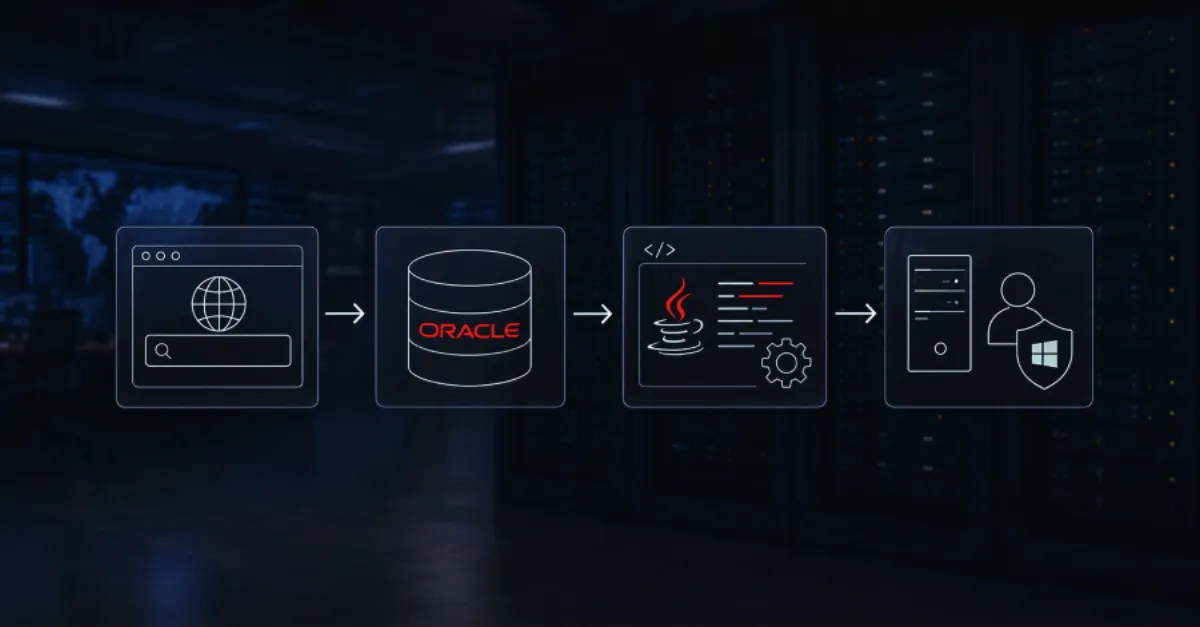
A newly observed attack technique shows how cybercriminals are turning a classic web vulnerability into a complete server takeover by abusing features built into Oracle database software. The method involves compiling a malicious tool named ‘khunt’ right inside the Oracle environment, then using it to jump from a limited SQL injection flaw all the way to gaining Windows SYSTEM access — the highest privilege level on the target machine.
The attack begins with SQL injection, often shortened to SQLi. This is a well-known flaw where an attacker slips unauthorized database commands into a website’s input fields — like login boxes or search bars — because the application does not properly filter out dangerous characters. A successful SQLi can let an intruder read, alter, or delete data stored in the backend database. However, while serious, a typical SQLi might only grant the attacker the permissions of the database user account, which is usually restricted and cannot directly control the operating system.
What makes this new approach especially dangerous is how the attacker leverages the Oracle database’s own ability to compile and run code. An Oracle database can be configured to execute external procedures — programs written in languages like C — that extend its functionality. In this scenario, after finding a SQL injection point, the intruder uploads the source code for ‘khunt’ into the database and then issues commands that tell Oracle to compile it inside the database server’s own process space. Because the compilation and execution happen within the database’s trusted environment, traditional security tools may not raise an alert.
Once ‘khunt’ is compiled and loaded, it acts as a bridge to the underlying Windows operating system. The tool exploits the permissions of the Oracle service, which often runs with high privileges on Windows. By design, Oracle services on Windows frequently operate under the SYSTEM account, which has unrestricted access to files, processes, and system settings. The ‘khunt’ payload seizes this high-level context, allowing the attacker to execute arbitrary commands with SYSTEM rights — effectively giving them complete control over the entire server, not just the database.
For website owners and hosting providers, this attack chain is a stark reminder that a single overlooked SQL injection vulnerability can lead to the compromise of an entire hosting infrastructure. Shared hosting environments, where multiple customer sites run on the same server, are particularly at risk: if one account is breached and an attacker escalates to SYSTEM, all other websites on that machine can be accessed, defaced, or hijacked. Even dedicated servers can be fully ruined by such an escalation, leading to data theft, ransomware deployment, or the server being used for further attacks.
Defending against this threat requires a layered security approach. Developers must use parameterized queries and prepared statements to eliminate SQL injection at the source, while database administrators should follow the principle of least privilege, ensuring that database service accounts do not run as SYSTEM whenever possible. Regular patching of both the Oracle database software and the Windows operating system closes the pathways that these escalation tools try to exploit. For businesses and website owners who rely on managed hosting, services like AEU Hosting provide hardened environments where database security patches are applied promptly and web application firewalls are in place to block injection attempts before they reach the database.
Organizations should also implement runtime monitoring to detect unusual activities, such as unexpected code compilation or privilege escalation attempts within the database server. Network segmentation can limit the blast radius if a compromise does occur, keeping web and database servers isolated from other critical systems. Finally, prompt incident response planning is essential: knowing how to quickly isolate a compromised host and restore from clean backups can mean the difference between a minor incident and a catastrophic breach.
How to Protect Yourself
- Update your website’s software and any plugins regularly to close security gaps that could allow SQL injection.
- Use a web application firewall (a service that filters malicious traffic before it reaches your site) to block known SQL injection patterns.
- Choose a hosting provider that applies security patches to database software and monitors for suspicious activity.
- Ensure your database user accounts have the minimum permissions needed, so even if an attacker gets in, they cannot take over the server.
- Keep frequent, offline backups of your website and database to recover quickly in case of a compromise.