
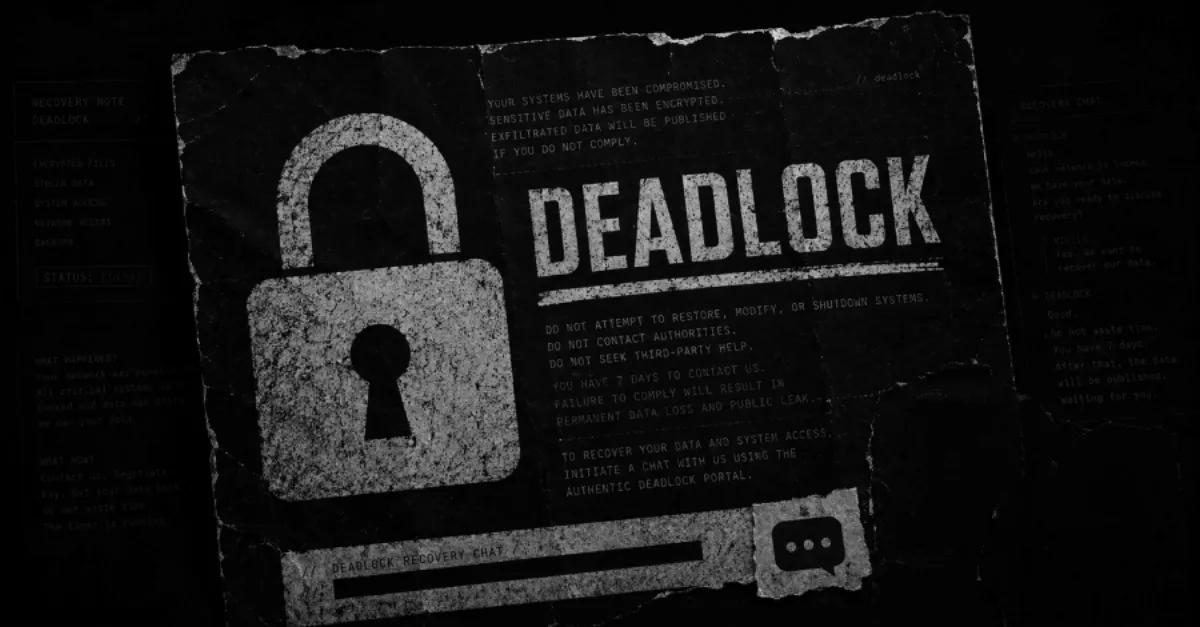
DeadLock Ransomware Employs Polygon Smart Contracts for Hard-to-Disrupt Extortion
A recently observed ransomware operation named DeadLock uses smart contracts on the Polygon blockchain to build extortion infrastructure that is more resistant to takedowns, posing a new challenge for website defenders.
A new ransomware strain dubbed DeadLock has emerged with a troubling twist: it leverages smart contracts on the Polygon blockchain to manage extortion, making its infrastructure significantly harder to disrupt. Ransomware is a type of malicious software that encrypts a victim’s files and demands payment, usually in cryptocurrency, in exchange for the decryption key. Traditionally, operators rely on centralised command-and-control servers, payment portals, and leak sites, all of which are prime targets for takedown by law enforcement or security researchers. By shifting core extortion functions to a decentralised smart contract on a public blockchain, DeadLock removes these central points of failure.
Smart contracts are self-executing programs stored on a blockchain that automatically perform actions when predefined conditions are met. Because they live on a distributed network, no single authority can delete or alter them once deployed, and they continue to operate as long as the blockchain itself exists. DeadLock appears to use Polygon, a so-called layer‑2 scaling solution that runs alongside the Ethereum blockchain, offering faster and cheaper transactions while still inheriting Ethereum’s security. This means the ransomware’s payment handling, victim negotiation, and possibly even the delivery of decryption keys can be automated through immutable code, leaving investigators with little to confiscate. The attackers’ identities remain hidden behind pseudonymous wallet addresses, further complicating attribution.
The choice of Polygon is strategic. Unlike transactions on Ethereum’s main network, which can be slow and expensive during periods of high demand, Polygon processes operations in seconds at a fraction of the cost. This makes it practical for micro‑transactions and automated interactions with victims. The smart contract could, for example, verify a ransom payment, generate a unique decryption key, and provide it to the victim without any human intervention. It could also manage a “dead drop” where stolen data is stored, with access granted only after payment. Because the code is on‑chain, takedown efforts cannot simply delete the contract; they would have to convince the entire Polygon network to reverse it, which is practically impossible under normal circumstances.
For website owners and IT teams, the rise of blockchain‑powered ransomware highlights a broader threat: compromised websites are a common delivery vector. Attackers often break into poorly secured sites through outdated plugins, weak passwords, or unpatched vulnerabilities, then use those sites to host malicious downloads or redirect visitors to phishing pages. A single infected website can spread DeadLock to hundreds of unsuspecting users. This underscores the importance of robust hosting security. A managed hosting solution, such as AEU Hosting’s managed WordPress service that includes automated updates, malware scanning, and web application firewalling, can help harden websites against the initial compromises that lead to ransomware distribution, but no single measure is a silver bullet.
Defending against advanced ransomware like DeadLock requires a layered approach. Organisations and individuals should maintain offline backups that are isolated from the network, so files can be restored without paying ransoms. Keeping all software up to date closes the vulnerabilities that ransomware often exploits to gain access. Enabling multi‑factor authentication adds an extra barrier against stolen credentials, while security awareness training helps users recognise phishing attempts that are frequently the first step in an attack. For website administrators specifically, regular vulnerability scans, strict access controls, and immediate patching of content management systems are essential. As cybercriminals continue to innovate, security practices must evolve, but foundational measures remain the strongest defense.
How to Protect Yourself
- Keep a recent backup of your important files on an external hard drive or cloud service that is not always connected to your computer, so you can restore them if ransomware encrypts your data.
- Update your computer, phone, and website software regularly, as these updates often fix security holes that ransomware might use to get in.
- Turn on two‑step verification (also called multi‑factor authentication) wherever possible, especially for email and website logins, so a stolen password alone is not enough to access your account.
- Be cautious with email attachments and links, even if they seem to come from someone you know; if something feels off, verify through another channel before clicking.
- If you run a website, use a security plugin or a web application firewall, and promptly apply updates for your content management system and any add‑ons to prevent attackers from breaking in.