
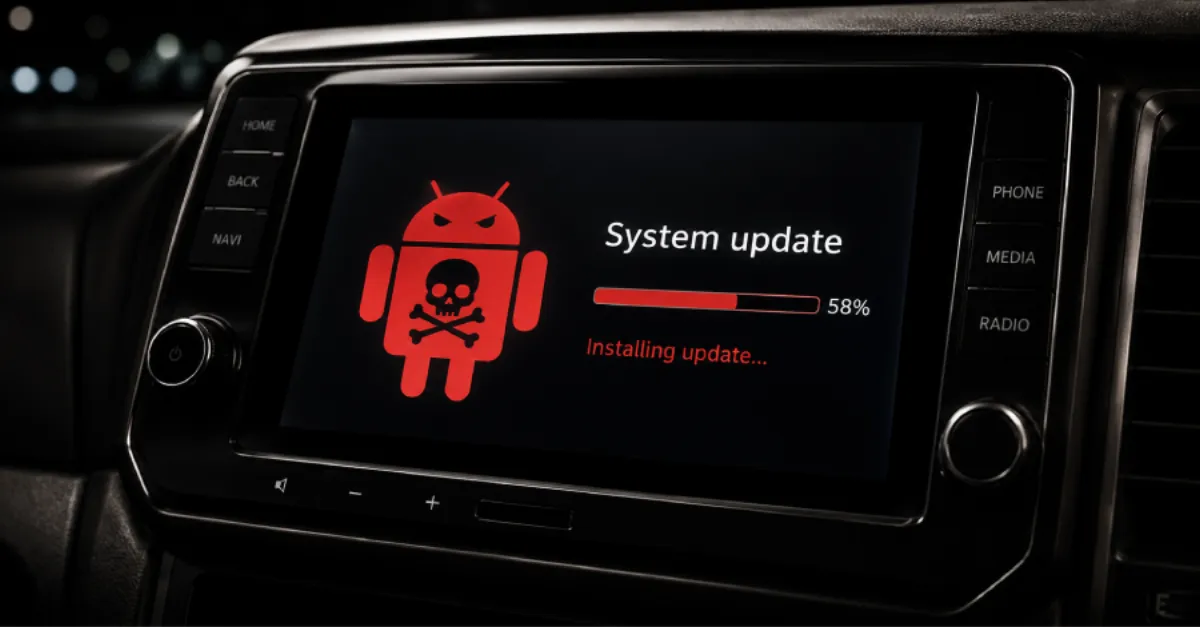
Car Infotainment Systems Under Attack as Android Malware Rides on Legitimate Updates for Ad Fraud and Proxy Crimes
A new Android malware campaign hides in built-in car updaters to commit ad fraud and turn infected vehicles into proxy botnet nodes. Here's what that means in practice.
Researchers have uncovered a new Android malware campaign that targets the built-in updater of in-car infotainment systems. This is a significant development because modern vehicles are essentially connected computers. The malware is distributed through the same mechanism that installs legitimate software updates. When a car receives a routine update from its manufacturer, the malware can ride along and silently install itself on the entertainment system. Once active, it turns the car into a tool for two disturbing criminal activities: ad fraud and a proxy botnet.
Ad fraud is a scheme where the malware generates fake ad clicks or displays hidden ads, inflating ad engagement metrics. Attackers get paid for these clicks, and the unauthorized activity often goes unnoticed by the car owner. This is a profitable venture because the car's internet connection is used, and the ad revenue is collected by the attackers. The other activity, a proxy botnet, is more concerning. A proxy botnet is a network of compromised devices used to route internet traffic on behalf of the attacker. By using your car as a proxy, the attacker can send malicious requests through your car's IP address, effectively hiding their own identity. This traffic can be used for anything from launching attacks on websites to sending spam, all while appearing to come from your vehicle.
The connection to car owners is primarily about privacy and security. If your car's infotainment system is part of a proxy botnet, it could be used to commit crimes without your knowledge. The car's data plan might be drained, and the system could be slowed down. Additionally, the malicious traffic could be traced back to your vehicle, potentially putting you in an awkward or even legal position. For businesses and website owners, this threat is part of a larger trend. Proxy botnets are a common way to hide the origin of attack traffic. If a botnet uses a car as a proxy, it becomes harder to block an attacker, since the traffic appears to come from a legitimate IP address. This makes protecting web infrastructure more challenging.
Protecting yourself from this particular threat is not easy, but there are practical steps. First, you should only install updates that come from official sources. Many car manufacturers provide over-the-air updates through their own servers. These are your only trusted pathway. If you are ever prompted to install an update manually, verify it comes from the manufacturer and not from a third party app. Second, be aware of public Wi-Fi networks. Avoid downloading updates while connected to an unsecured public hotspot, as an attacker could intercept the connection and inject malware. Instead, use a trusted Wi-Fi network or your mobile hotspot. Third, keep an eye on unusual data usage or system behavior. If your car's infotainment system becomes sluggish or uses an excessive amount of data, that could be a sign of malware. Finally, for those managing a website or IT infrastructure, treating every update source as untrusted is key. Use a security-first approach and maintain good logging and monitoring.
The discovery of this Android malware in car updaters underscores the reach of modern cybercrime. It also highlights that the typical security mindset of keeping software updated is not enough if the update mechanism itself is compromised. To stay protected in this evolving landscape, consider reinforcing your systems with dedicated security expertise. For website owners and IT teams, partnering with a security-first infrastructure and consulting provider like AEU-I can help you identify and close the gaps that such threats exploit, ensuring your own operations are both resilient and trustworthy.
How to Protect Yourself
- Only install car system updates from your manufacturer's official app or over-the-air service. Never use a third party tool or a random update prompt from an unknown source.
- If you are prompted to update your car's software manually, verify it comes from the manufacturer's website or app, not from an unapproved link or app.
- Avoid downloading updates over public Wi-Fi. Use your mobile phone's hotspot instead, and always confirm the network name you are connecting to.
- Regularly check your car's data usage. If you notice a drastic increase without a change in your habits, that could indicate the presence of malware.