
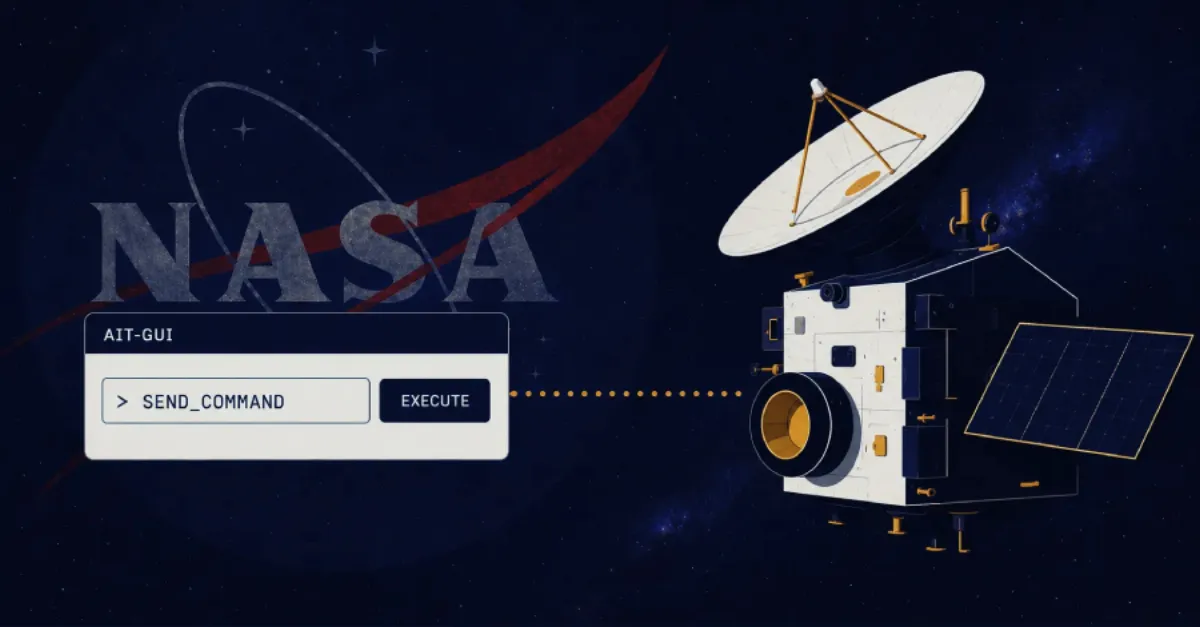
Unauthenticated Attackers Could Take Over Spacecraft Via NASA AIT-GUI Flaws
Security researchers have uncovered vulnerabilities in NASA's AIT-GUI that could let remote attackers without credentials issue commands to spacecraft. The flaws highlight the dire need for robust authentication in contr…
NASA's AIT-GUI, a graphical user interface used for spacecraft control, has been found to have multiple security vulnerabilities. These flaws could allow an unauthenticated attacker to issue commands directly to spacecraft, bypassing all authentication requirements. This is a severe risk because the interface is the primary tool for mission operators, and any unauthorized command could disrupt operations or cause physical damage to the space vehicle. The finding is a stark reminder that even the most critical systems can fall prey to avoidable security oversights.
To understand the impact, it is important to know what an unauthenticated attack means. In cybersecurity, authentication is the process of verifying that a user is who they claim to be, typically through a password or device. An unauthenticated attacker is someone who has no credentials. If a vulnerable interface is exposed, they can interact with it without any login. In the case of AIT-GUI, this means that an attacker who can access the interface could potentially send commands that alter a spacecraft's behavior, such as changing its orbit, deactivating systems, or even redirecting telemetry. The exact nature of the flaws might involve command injection, where malicious input is interpreted as a valid command. While the specific details are not fully public, the pattern is common in web-based control panels.
The implications extend beyond NASA. Most organizations rely on web-based management interfaces for servers, routers, and industrial control systems. If those interfaces have similar vulnerabilities, an attacker could take over the underlying system. For example, a managed WordPress hosting panel or a cloud console is a high-value target. A vulnerability that allows unauthenticated command execution would be catastrophic for the business and its customers. The NASA disclosure highlights the universal importance of hardening such systems.
For website owners and IT teams, the key takeaway is to never expose administrative interfaces to the open internet. A common best practice is to require a virtual private network (VPN) connection to access management tools. Additionally, all software must be kept up to date. Vendors often release patches for known vulnerabilities, but many sites remain unpatched for months, leaving them exposed. Regular security scanning can help identify such gaps before attackers do.
The AIT-GUI flaws are also a reminder that security is a continuous process. Even systems designed with security in mind can have hidden flaws. Organizations should adopt a defense-in-depth approach, which layers multiple security controls so that if one fails, others protect the infrastructure. Monitoring logs for abnormal access patterns and applying the principle of least privilege, where users only have the permissions they need, are crucial steps.
For organizations facing similar risks, AEU-I, the security-first IT infrastructure and consulting service from AEU Group, helps teams harden their systems against unauthenticated attacks. Its consulting practice focuses on identifying vulnerabilities, implementing secure configurations, and establishing monitoring processes. While AEU-I cannot protect spacecraft, it offers the same discipline to businesses on earth.
In conclusion, the NASA story is a wake-up call. It demonstrates that no system is too important to be scrutinized, and that the consequences of flawed software can be physical. By applying the lessons from this event, website owners and IT professionals can better secure their own environments. Constant vigilance, timely patching, and appropriate access controls are the foundation of a strong security posture.
How to Protect Yourself
- Keep all software, plugins, and applications updated to the latest versions so that known vulnerabilities are patched.
- Never expose admin panels or control interfaces directly to the internet; require a VPN for remote access instead.
- Use strong, unique passwords and enable two-factor authentication for any account that manages a website or server.
- Regularly check server logs for unusual access attempts or activities, and investigate anything suspicious right away.
- Turn off unused features, services, and accounts to reduce the attack surface of your system.
- Run periodic security scans using a reputable tool to find and fix weaknesses before attackers do.