
Atlassian Rovo Flaw Allows Attackers to Extract Confidential Data from Jira and Confluence
A vulnerability in Atlassian's Rovo AI assistant could let attackers siphon sensitive project data from Jira and Confluence by tricking the system into sending it to them.
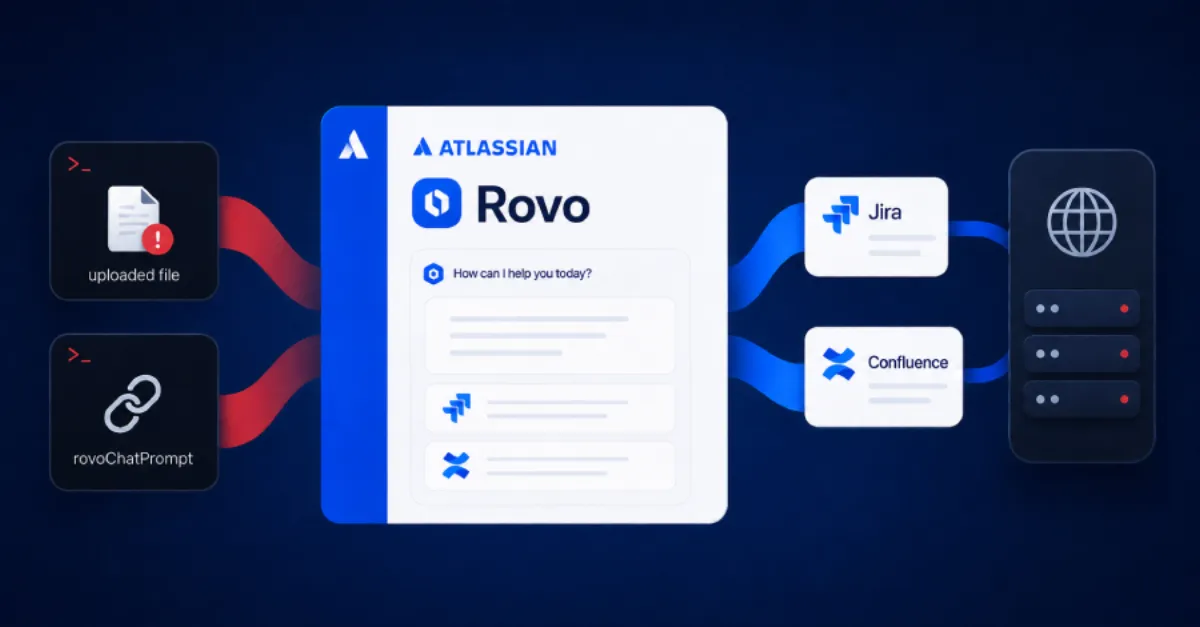
A significant security issue has emerged around Atlassian Rovo, an artificial intelligence assistant designed to streamline work by interacting with data from Jira and Confluence. Researchers or sources indicate that the tool can be manipulated into forwarding sensitive information to unauthorized parties. While technical details remain scarce, the core problem appears to involve tricking Rovo into performing actions that bypass intended access controls, potentially through cleverly crafted prompts or interactions that exploit the assistant's design. For organizations relying on Atlassian's suite for project management and documentation, this represents a serious risk of data leakage.
Rovo is marketed as an AI companion that connects knowledge across Atlassian products, making it easier to find answers, summarize discussions, and automate routine tasks. However, its deep integration with Jira, a project management and issue tracking platform, and Confluence, a collaborative documentation space, means it holds keys to a treasure trove of internal information. This can include source code, product roadmaps, confidential business processes, customer details, and even credentials embedded in notes or tickets. An attacker who successfully tricks Rovo could exfiltrate this data without ever directly breaching the underlying services, making detection difficult.
The attack method likely involves social engineering or prompt injection, a technique where an adversary crafts input that causes an AI to produce unintended outputs or take destructive actions. In this scenario, an attacker might send a specially worded message through a channel that Rovo monitors, or embed malicious instructions in content it processes. Because Rovo is designed to retrieve and relay information, it could be fooled into sending Jira issues or Confluence pages to an external address. This highlights a growing concern with AI assistants that aggregate sensitive data: they expand the attack surface by introducing a single point of access to multiple repositories.
For website owners and businesses that use Atlassian's cloud services, the impact extends beyond internal operations. Stolen project data could include API keys, database passwords, or integration secrets that link to public facing websites and hosting environments. If attackers obtain such credentials, they could compromise web servers, manipulate content, or launch further attacks against customers. This interconnectivity means that a breach in a productivity tool can quickly cascade into a full scale website compromise. Managed hosting environments, where multiple sites might share underlying infrastructure, are particularly at risk if a site owner's Atlassian credentials are exposed.
Atlassian has not yet released a public advisory detailing the flaw or fixes, but the company typically responds swiftly to such reports. In the interim, organizations should assume that their Rovo instances could be a target and take proactive steps to limit exposure. Review the permissions granted to Rovo and any connected apps; ensure that only necessary data is accessible and that sensitive fields are masked. Enforce multi factor authentication on all Atlassian accounts, which adds a layer of security even if a password is stolen. Monitor audit logs for unusual Rovo activity, such as repeated queries for sensitive projects or unexpected data transfers. By adding a protective DNS service like AEU DNS, which blocks access to known malicious domains, companies can add an extra filter against phishing sites that attempt to capture login credentials or exfiltrate data. Training employees to recognize phishing attempts and suspicious messages related to internal tools is equally critical, as many AI based attacks begin with a simple deceptive message.
The emergence of this vulnerability underscores the need for robust security practices around AI assistants that have broad access to corporate data. As tools like Rovo become more common, they will increasingly attract attackers looking for a low effort path to valuable information. Organizations that integrate such assistants must treat them as privileged systems, subject to the same rigorous access controls, monitoring, and patching as any other critical component. This incident serves as a timely reminder that the convenience of AI should never come at the expense of foundational security, and that third party tools can become a weak link in the chain protecting websites and sensitive data.
How to Protect Yourself
- Check and restrict which apps and add-ons can access your Jira and Confluence accounts by reviewing the permissions in your Atlassian settings.
- Turn on two-factor authentication (a security step that requires a code from your phone in addition to your password) for your Atlassian account to stop attackers even if they learn your password.
- Watch out for unexpected emails or messages that ask for your login details or that contain links about Atlassian tools, as they could be phishing attempts.
- Keep your Atlassian apps updated to the latest version to receive security fixes and reduce the risk of known issues being exploited.
- Educate your team about the dangers of clicking suspicious links that claim to be from internal tools, and encourage them to verify any unusual requests through another channel.