
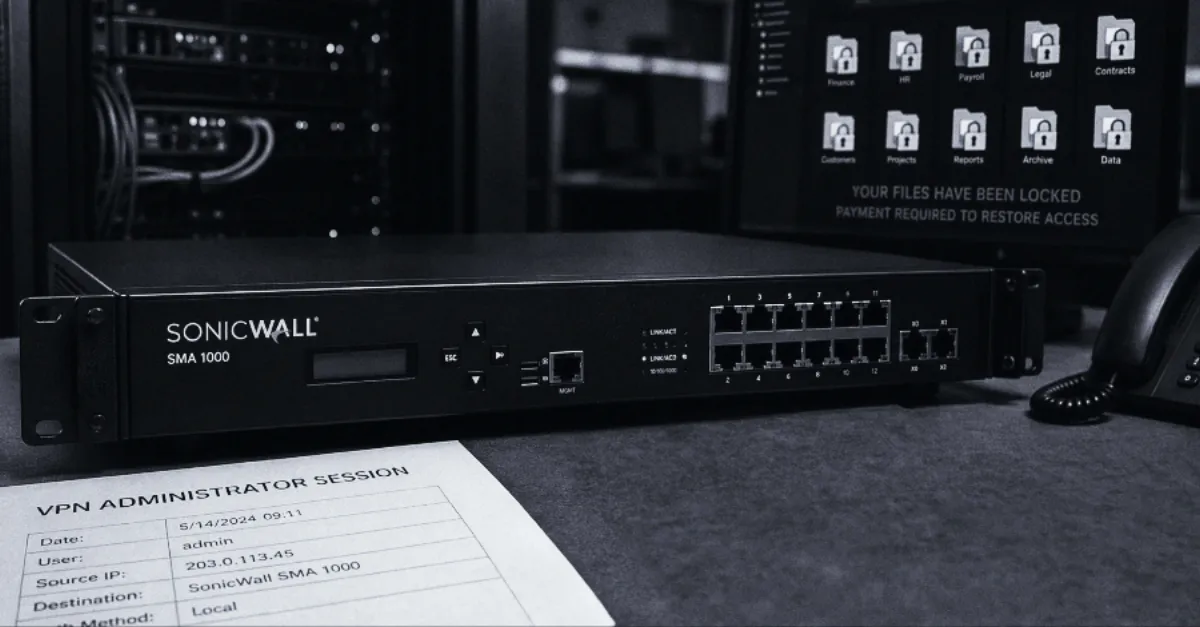
INC Ransomware Group Actively Exploiting SonicWall SMA 1000 Vulnerabilities
INC Ransomware has become a leading threat actor targeting unpatched SonicWall SMA 1000 appliances, enabling network breaches that can spill over to web servers and hosted data.
The INC ransomware group has recently intensified its focus on SonicWall Secure Mobile Access (SMA) 1000 series appliances, exploiting known security flaws to gain initial access into corporate networks. These appliances, often used to provide remote VPN access for employees and third parties, are critical entry points; a successful compromise can grant attackers a foothold inside the perimeter, from which they can move laterally to web servers, databases, and cloud-hosted assets.
Once inside, the group typically deploys its ransomware payload to encrypt files and extort victims, but the danger extends further. By compromising the SMA 1000—essentially a gateway—attackers can intercept credentials, manipulate DNS resolution, or pivot to internal web applications. For businesses running public-facing websites on the same network, this can lead to website defacement, customer data exfiltration, or injection of malicious scripts that affect visitors.
SonicWall has previously issued patches for vulnerabilities in the SMA 1000 line, including critical flaws that allow unauthenticated remote command execution. While the exact CVEs being exploited in this campaign were not detailed in the latest advisory, it is a stark reminder that delaying firmware updates on edge devices creates an open door for ransomware groups. Security patches for these appliances should be treated with the same urgency as those for public web servers.
For website owners and hosting providers, the ripple effects are real: a compromised network appliance can serve as a launchpad for DNS hijacking, redirecting site traffic to phishing pages, or enabling attackers to intercept encrypted traffic if they manage to push malicious certificates. Organizations should immediately verify that their SMA 1000 devices—if still in use—are running the latest firmware, and review access logs for any signs of unauthorized activity.
A security-first approach to IT infrastructure, such as that offered by AEU-I, includes regular assessments of perimeter devices and network segmentation to contain breaches, ensuring that an exploit on one appliance doesn’t cascade into a full-blown website compromise or data loss.