
Critical Rails Vulnerability Enables Unauthenticated Server File Read via Image Uploads
A severe flaw in the Ruby on Rails framework could allow attackers to read arbitrary server files by exploiting image upload functionality, posing a serious risk to web applications.
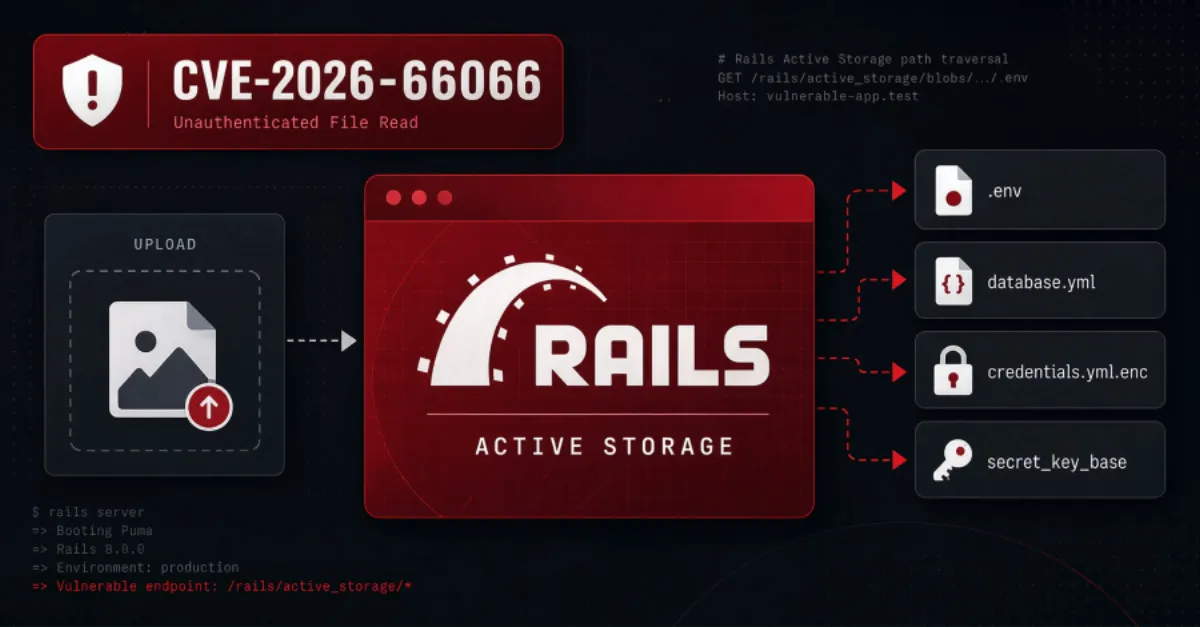
A newly disclosed critical vulnerability in the Ruby on Rails web framework could let unauthenticated attackers access server files simply by sending specially crafted image uploads. Details emerging from a report published on The Hacker News indicate that the flaw originates in how Rails processes certain image formats during upload, potentially leading to path traversal or arbitrary file read capabilities.
If exploited, the vulnerability would allow an outsider without any login credentials to read sensitive files stored on the server—configuration files, database credentials, environment variables, and even source code. For website owners and developers relying on Rails to power their applications, this represents a significant security threat. An attacker could gather critical information that paves the way for further compromise, such as full system takeover.
The flaw is especially dangerous because image uploading is a common feature in modern web applications—user avatars, product photos, article media—making many sites potentially vulnerable by default. Since the attack can be carried out without authentication, any publicly accessible Rails application with file upload functionality could be at risk until patches are applied. At the time of writing, the Rails core team is expected to release an urgent security update, and site administrators are advised to monitor official Rails channels for the patch and apply it immediately.
For hosting providers and IT teams managing Rails-based sites, hardening upload directories and employing strict file type validation may serve as temporary mitigations, but nothing replaces a vendor-supplied fix. Organizations that run managed hosting environments can reduce exposure by leaning on their provider’s proactive security measures. AEU-I, our security-first IT and consulting arm, helps businesses stay ahead of such threats by ensuring web frameworks and server stacks are continuously monitored, patched, and hardened against emerging exploits—keeping your applications safe without the in-house overhead.