
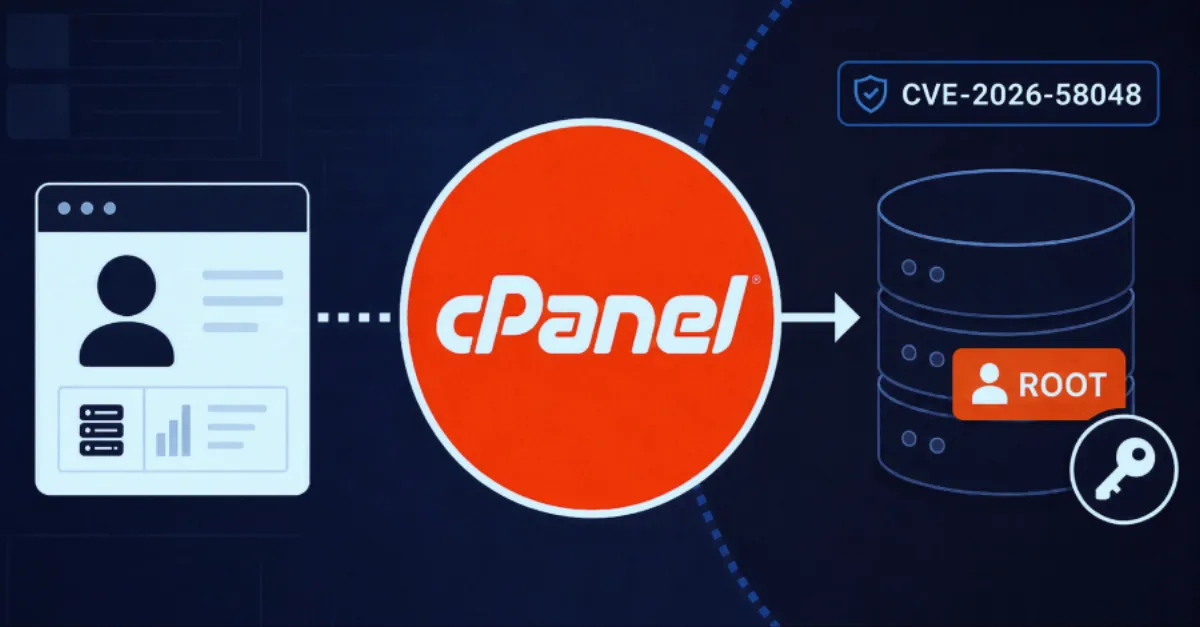
Critical cPanel Vulnerability Could Grant Hosting Users Root Database Privileges
A severe flaw in cPanel allows limited hosting accounts to execute SQL commands as the database root, risking complete server compromise for all sites hosted on the server.
A newly disclosed critical vulnerability in cPanel, the widely used web hosting management panel, could allow customers with ordinary hosting accounts to run SQL queries with root-level privileges on the database server. The flaw effectively breaks the isolation between different websites on a shared server, opening the door to massive data breaches.
If exploited, an attacker with a single compromised or malicious hosting account could read, alter, or delete any data across all databases on the server—accessing sensitive information from other clients. This undermines the core security boundary that typically restricts users to their own designated databases, making it a top priority for hosting providers and server administrators to patch immediately.
The vulnerability stems from how cPanel handles certain database operations, where insufficient privilege separation allows a user-initiated action to be executed as the system's database root user instead of the intended limited account. cPanel has released a security update addressing the issue, and all installs should be upgraded without delay. An audit of database access logs is also recommended to check for any prior exploitation.
For website owners relying on managed platforms, the incident underscores the value of robust hosting security practices. AEU Hosting, for instance, employs proactive patch management and strict isolation measures to contain such threats before they escalate. Nevertheless, all users should ensure their databases use strong, unique passwords and their hosting environments stay current with updates to minimize risk.
How to Protect Yourself
- Log into your hosting control panel and look for any available updates to cPanel or the server software—apply them right away or ask your hosting provider to do it.
- Change the passwords for all your website databases, making sure each one is strong, unique, and never reused across sites.
- Review the database user accounts linked to your websites and remove any permissions that aren't absolutely necessary for normal operation.
- Regularly check your website for unexpected content changes, unknown admin accounts, or suspicious activity that could signal a database compromise.