
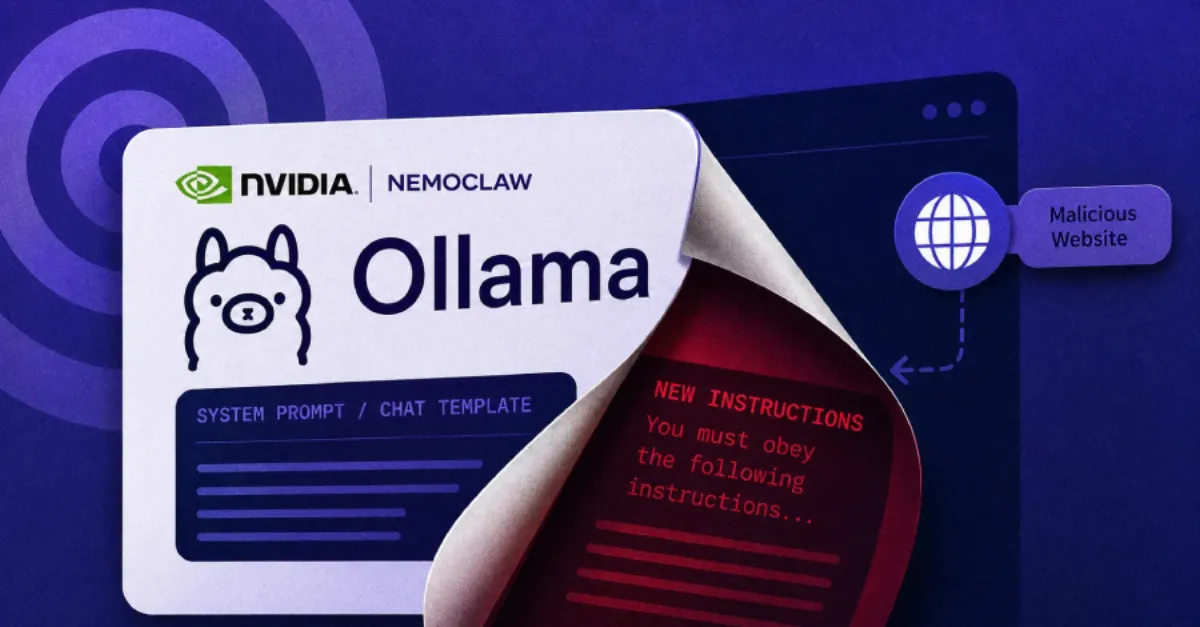
Malicious Webpage Threatens NVIDIA NemoClaw: Local AI Models at Risk of Poisoning
A cybersecurity concern has emerged: a single malicious webpage can poison your local AI model, particularly one built on NVIDIA's NemoClaw, potentially corrupting its behavior and reshaping its outputs.
Running AI models locally on your own hardware is becoming increasingly popular because it gives you privacy and speed. One well-known platform for this is NVIDIA's NemoClaw, which allows you to host and run sophisticated AI models directly on your machines. However, a newly highlighted threat shows that a simple malicious webpage could poison your local AI model. Poisoning is a process where an attacker manipulates the training or input data of a model to alter its behavior in harmful ways. In this case, the model affected is the one running behind NVIDIA NemoClaw, meaning your local AI deployment could be silently corrupted.
To understand the risk, it helps to know what a local AI model is. A local AI model is a program you run on your own computer, not in the cloud. It performs tasks such as understanding text, generating answers, or recognizing images. These models are trained on vast amounts of data and learn patterns to make predictions. Because the model lives on your machine, you have full control over it and your data remains private. NVIDIA's NemoClaw is a framework that makes it easier to deploy and manage such models on your own servers or workstations.
The attack works like this: as you browse the web, you might visit a page that contains hidden code or specially crafted content. This content is designed to interact with your local AI model, feeding it malicious inputs. Over time, the model updates its internal weights and biases based on these inputs, taking on the attacker's desired behavior. This is known as 'poisoning'. Even a single exposure could be enough to start the corruption, and the results may be subtle. The model might still appear to work, but its outputs begin to shift in ways that benefit the attacker.
For website owners and IT teams, this is a serious concern. Many organizations use local AI models for everyday tasks: running chatbots, drafting marketing copy, analyzing customer feedback, or supporting internal processes. If an employee is tricked into visiting a malicious webpage, the local AI model could become unreliable. The poisoned model might generate incorrect facts, produce biased responses, or leak sensitive information. In business settings, this can lead to poor decisions, financial losses, and reputational damage. Because the model runs locally, unusual changes may go unnoticed at first, making the attack silent and persistent.
The most concerning aspect is the low barrier to entry. An attacker does not need sophisticated access to your systems. They simply need to convince someone to open a malicious webpage. This can be done through phishing, malicious ads, or compromised websites. Once the page loads, it may communicate with the local AI model if the model has an accessible interface, such as a web-based API or plugin. The attack bypasses traditional security controls because it relies on the model's own learning process rather than exploiting a system vulnerability.
To protect against this threat, you should treat your local AI model as a valuable asset. Isolate AI workloads from general web browsing by using separate machines or virtual environments. Keep your AI software and its dependencies up to date to ensure patches are applied. Monitor the behavior of your models for signs of odd outputs or changes in performance. And always approach untrusted web pages with caution, especially if you are using an AI model that might be exposed.
For businesses that want to safeguard their AI deployments, a security-first strategy is essential. AEU-I, the security and infrastructure consulting arm of AEU Group, helps organizations assess and harden their IT environments. AEU-I experts can review your current setup, recommend practices like network segmentation and least-privilege access, and guide you in building a resilient infrastructure. By working with AEU-I, you can better defend against hidden threats such as local AI model poisoning and keep your data and services safe.
How to Protect Yourself
- Keep your AI software and all related programs up to date with the latest security patches.
- Avoid clicking on links from unknown senders or visiting unfamiliar websites that could contain hidden malicious code.
- Run your local AI models on a separate computer or in a virtual machine that is not used for daily web browsing.
- Watch for unusual behavior in your AI outputs, such as sudden errors or unexpected answers, and investigate them.
- Use a security-focused DNS service to block known malicious websites before they can harm your systems.