
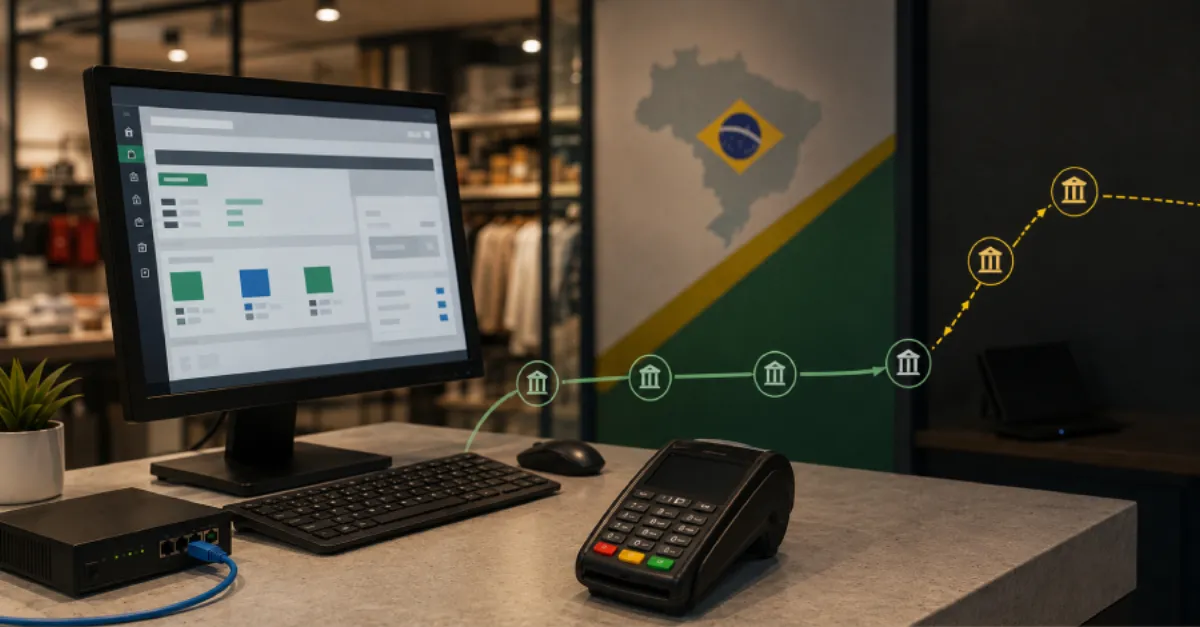
Hundreds of Fraudulent Transactions via Brazilian Payment Systems Linked to Breeze Comet
A threat actor named Breeze Comet has been observed executing hundreds of fraudulent transactions through Brazilian payment systems, raising concerns for merchants and users of instant payment and bank slip services.
A cyber threat actor tracked as Breeze Comet has been observed carrying out hundreds of fraudulent transactions through Brazilian payment systems, according to a new report. The activity raises serious concerns for consumers, merchants, and financial institutions operating in Brazil, where instant payment platforms and bank slips are used for a large share of everyday purchases. Although the source does not spell out the exact tactics, the sheer volume of transactions suggests an automated or semi-automated operation designed to move stolen funds quickly before victims notice.
Brazilian payment systems include PIX, an instant payment service run by the central bank that moves money between accounts in seconds, and boleto bancário, a widely used bank slip that buyers can pay at banks, ATMs, or through internet banking. Fraudsters often target these channels because they are fast, widely adopted, and can be difficult to reverse once the money leaves the victim's account. In a typical scheme, criminals may use stolen credentials, compromised merchant accounts, or fake invoices to push unauthorized payments through these rails. While the report on Breeze Comet does not confirm the exact method, its observed behavior fits a pattern of payment fraud that relies on speed and scale.
For website owners and online businesses, this kind of activity underscores the importance of securing payment integrations and monitoring transaction logs. An e-commerce site that processes PIX or boleto payments could be abused to generate fake payment requests or to collect money from victims. If a merchant account is taken over, attackers can change payout destinations or inject malicious code into checkout pages, redirecting funds. The consequences can include chargebacks, frozen accounts, lost revenue, and damage to customer trust. Even businesses outside Brazil should pay attention, because many international payment processors support Brazilian payment methods and could be caught up in cross-border fraud.
Consumers can protect themselves by turning on instant transaction alerts from their bank or payment app, checking statements regularly, and using unique passwords for every financial account. Two-factor authentication, which adds a second check beyond a password, is another simple but effective barrier. Being alert to phishing messages that ask for payment details or request a "confirmation" of a transaction is also critical, because attackers often trick people into approving transfers themselves.
From a technical defense standpoint, security teams should treat unusual payment patterns as a signal to investigate. Monitoring for rapid, repeated transactions, new payout accounts, or changes in payment page code can catch fraud early. AEU-I, our security-first IT and consulting service, helps organizations harden their payment infrastructure and detect anomalous transaction behavior before it leads to financial loss. For businesses that run their own websites, keeping all payment plugins and platforms up to date and using a managed hosting environment with built-in security controls can reduce the attack surface.
How to Protect Yourself
- Turn on instant transaction alerts from your bank or payment app so you see every charge as it happens.
- Check your bank and card statements at least once a week and report any transaction you do not recognize right away.
- Use a unique, strong password for every online payment account and turn on two-factor authentication if available.
- Update your phone, computer, and payment apps as soon as updates are available to close security holes.
- Be cautious of emails or messages asking you to confirm payment details or click links, even if they look official.
- If you run a website that takes payments, keep your payment plugin or gateway software updated and monitor transactions for odd patterns.