
GoCaracal Malware Turns to Ethereum Smart Contract for Fallback C2 Resolution
A new malware strain uses a blockchain-based smart contract to locate a backup command-and-control server, making takedowns harder. Here's what site owners should know.
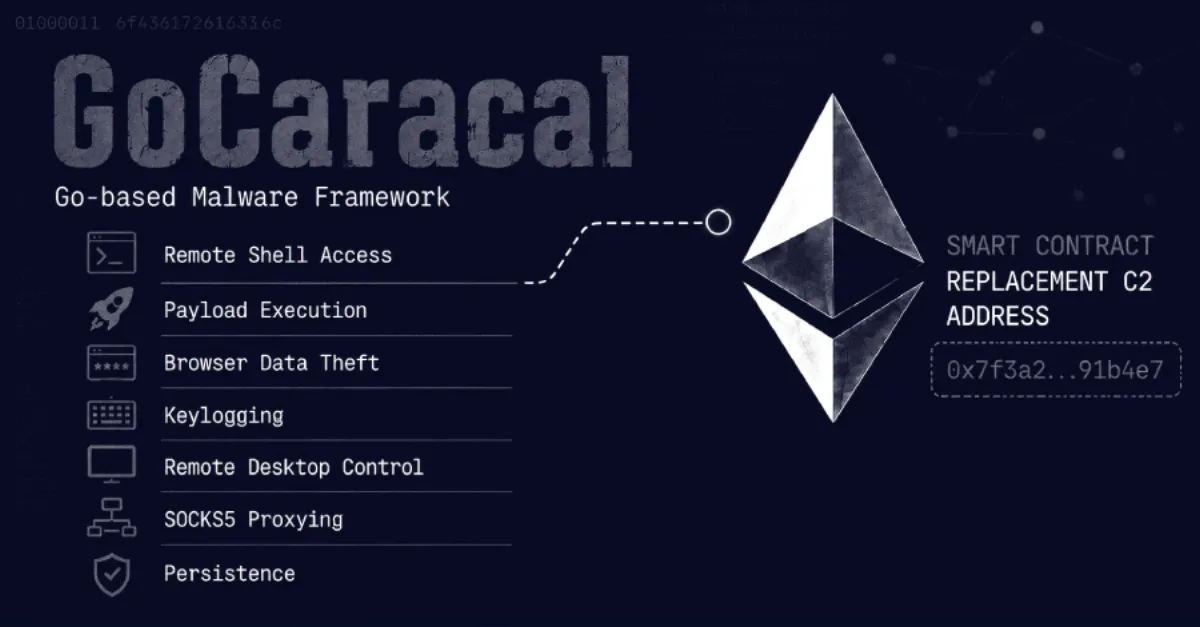
Security researchers have identified a malware family called GoCaracal that takes an unusual approach to staying online. Instead of having a fixed list of command servers built into its code, the malware looks up a replacement command-and-control address by querying a smart contract stored on the Ethereum blockchain. The source report from The Hacker News does not include further technical details, such as how GoCaracal spreads or what other capabilities it has, beyond this core behavior. For anyone running a website or managing IT infrastructure, this development highlights how attackers continue to find more resilient ways to keep their malicious infrastructure reachable.
To understand why this matters, it helps to know what these terms mean. A command-and-control server, often shortened to C2, is a computer that attackers use to send instructions to infected devices and receive stolen data. In most malware, the address of this server is written directly into the program. If security teams find that address, they can work with hosting providers or domain registrars to take the server offline. GoCaracal changes this by using a smart contract on Ethereum. A smart contract is a small piece of code that lives on a public blockchain, which is a shared digital ledger maintained by thousands of computers around the world. Once deployed, that code cannot be easily removed or edited by any single authority. When GoCaracal runs on a victim's machine, it contacts a specific smart contract to fetch a new C2 address. This means even if the original server is shut down, the malware can simply ask the blockchain for a fresh one.
This technique has serious implications for defenders. Because the blockchain is decentralized and censorship-resistant, there is no central hosting company to contact for a takedown. The smart contract will keep serving new addresses as long as the Ethereum network exists. For website owners and hosting providers, this makes detection and response more difficult. A compromised website could be used to spread GoCaracal to visitors, or an infected workstation could be used to steal login credentials for the site's admin panel. While the source report does not specify how GoCaracal is initially distributed, common infection routes include phishing emails, malicious downloads, or vulnerabilities in outdated software. Once inside, the malware's use of blockchain for C2 means that traditional network-based blocking lists may not be enough.
From a defensive perspective, organizations and individuals need to assume that simply blocking known bad IP addresses will not stop this kind of threat. Instead, the focus should be on preventing the malware from getting a foothold in the first place. Keeping all software patched and up to date remains the single most effective measure, because many malware infections exploit known vulnerabilities that already have fixes. For website operators, a managed hosting service like AEU Hosting can reduce the risk by automatically updating WordPress core and plugins, scanning for malware, and monitoring for suspicious outbound connections from the server. This layered approach means that even if a visitor's device is compromised, the website itself is less likely to become a distribution point.
Although the technical details of GoCaracal are still emerging, the trend is clear: attackers are adopting blockchain technology to make their infrastructure more resilient. Website owners, IT teams, and everyday users should treat this as a reminder that basic security hygiene remains critical. Use strong, unique passwords, enable two-factor authentication wherever possible, and back up important data regularly. If you suspect that a machine on your network has been infected, disconnect it from the internet and seek professional help. As this story develops, more information about GoCaracal's distribution methods and full capabilities will likely come to light. For now, the takeaway is that malware authors are finding new ways to stay a step ahead, and the rest of us need to keep our defenses up to date.
How to Protect Yourself
- Keep all software on your computer and phone updated with the latest security patches, and turn on automatic updates.
- Install a well-known antivirus or security app and let it scan your devices regularly.
- Do not open email attachments or click links from unknown senders, and double-check the sender's address even if the message looks familiar.
- If you manage a website, choose a hosting provider that offers automatic malware scanning and removal, and keep your site's plugins and themes updated.
- If your website is slow or behaving oddly, contact your hosting support immediately to check for malware.