
BlueNoroff Phishing Kit Impersonates Zoom to Steal Crypto Wallets
A new phishing kit from the BlueNoroff group uses fake Zoom invitations to silently profile cryptocurrency wallets before delivering malware, putting businesses and website owners at risk of data theft.
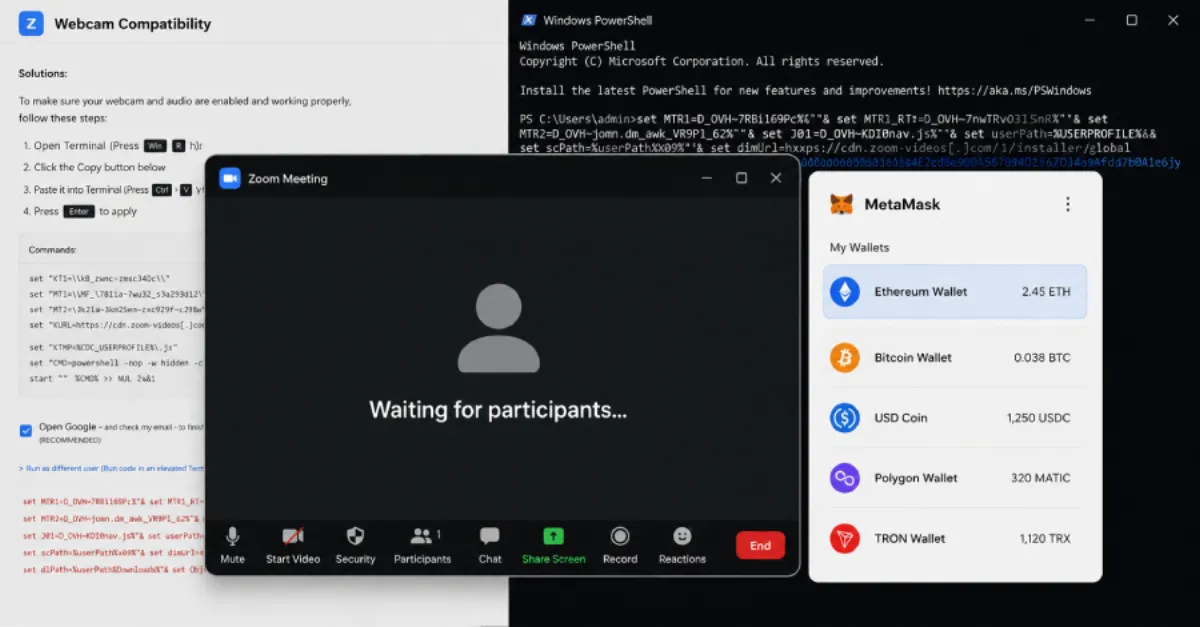
Cybersecurity researchers have uncovered a sophisticated phishing kit linked to the BlueNoroff threat group that abuses Zoom branding to target cryptocurrency holders. Unlike typical credential-harvesting pages, this toolkit first quietly profiles a victim’s cryptocurrency wallet activity—checking for installed browser extensions and wallet balances—before deploying malware. The stealthy approach allows attackers to prioritize high-value targets and maximize financial gain, all while evading early detection.
The attack begins with a socially engineered lure, often a targeted email or message containing a link to a supposed Zoom meeting. When the victim clicks, a fraudulent page mimics the familiar Zoom interface, but in the background, JavaScript code scans for cryptocurrency wallet browser extensions such as MetaMask. It gathers information about the wallets in use, their balances, and even past transaction activity. Only after this profiling is complete does the kit redirect the victim to a malware download—usually disguised as a Zoom installer update—which then establishes persistent access to the system for further malicious actions.
This method is particularly dangerous for businesses and website owners, as compromised legitimate websites are frequently the unwitting hosts of such phishing pages. Attackers often exploit vulnerable content management systems, outdated plugins, or weak credentials to plant phishing kits on trusted domains, making fraudulent pages harder for users and security filters to spot. Once a server is hijacked, the phishing content can spread rapidly and damage the reputation of the affected site while exposing visitors to serious threats.
To guard against these attacks, organizations should educate employees about verifying meeting invitations, use multi-factor authentication, and keep all software patched. For website operators, conducting regular security audits and promptly applying CMS and plugin updates is essential. Proactive monitoring and malware scanning can block the upload of unauthorized files. Services like AEU Hosting include built-in security measures such as automatic WordPress core and plugin updates, along with daily malware scans that help prevent attackers from using your domain as a launchpad for phishing campaigns. By hardening the hosting environment, site owners can protect both their own assets and their visitors from evolving threats like the BlueNoroff Zoom phishing kit.