
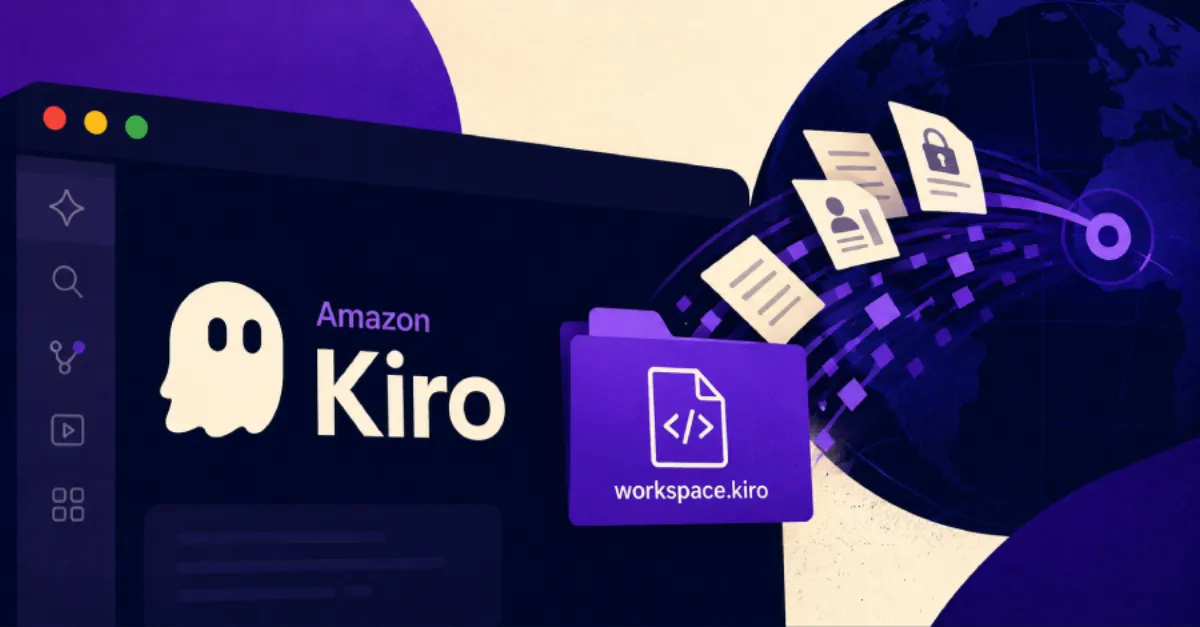
Amazon Kiro Prompt Injection Flaw Allows Sensitive Data Exfiltration Through Kiro Powers
A newly disclosed prompt injection vulnerability in Amazon Kiro can let attackers steal sensitive data by abusing Kiro Powers, putting users and connected systems at risk.
The Hacker News has reported a security issue in Amazon Kiro, a generative AI assistant, in which a prompt injection attack can exfiltrate sensitive data through a connected feature called Kiro Powers. This finding matters for anyone who runs a website, manages an IT environment, or uses AI tools in customer-facing applications, because prompt injection can turn a helpful assistant into a channel for data theft.
Prompt injection is a technique where an attacker hides misleading instructions inside text that the AI is asked to process. Those hidden instructions can override the AI's normal safety rules and make it perform actions the user never intended, such as revealing private information or calling an external service. Exfiltration means moving data out of a system without permission. The report indicates that a specially crafted prompt can trick Amazon Kiro into using Kiro Powers to send sensitive information to an attacker-controlled location, such as an external server the attacker operates.
For website owners and businesses, this type of flaw is especially dangerous if Amazon Kiro is integrated into a public facing service, such as a chat widget, a support bot, or a back office automation. A visitor or customer could submit a prompt that appears harmless but contains injected commands. If the AI has access to internal documents, API keys, customer records, or backend systems, the attacker might receive that data without ever directly attacking the underlying server. Because prompt injection happens through the normal user interface, common input filtering often does not detect it.
The Hacker News headline does not include a CVE identifier or a specific patch version, so the immediate remediation steps from Amazon are not yet clear from this report. In general, security researchers recommend treating any AI assistant as potentially influenced by attacker inputs. Users should never paste passwords, API keys, or confidential business documents into a chat window. Organizations should also limit the permissions granted to AI tools so that even a successful prompt injection cannot reach more than a small, isolated part of the data. Regular updates and monitoring of AI tool logs can help catch exfiltration attempts early.
The issue also highlights a broader challenge: as AI assistants gain more capabilities, such as Kiro Powers, they become more attractive targets because a single malicious prompt can trigger a chain of actions. Website owners who deploy AI should review all integrations and ask what data the assistant can read, write, or send. If the answer is not clearly limited, the safest choice is to restrict the assistant to a test environment until a patch is available.
For businesses that need help assessing AI integrations, AEU-I, the security-first IT, infrastructure and consulting service from AEU Group, works with teams to map data flows, enforce least-privilege access, and reduce the impact of prompt injection flaws like the one reported in Amazon Kiro.
How to Protect Yourself
- Never paste passwords, API keys, or confidential business documents into any AI chat window, including Amazon Kiro.
- Update Amazon Kiro and any connected apps as soon as a security patch is released; prompt injection holes are often fixed quietly.
- If your website uses an AI assistant, restrict what data the assistant can access, and never give it full access to your customer database or server.
- Monitor AI tool logs for unusual requests or data being sent to unexpected internet addresses; this can reveal an exfiltration attempt early.
- When testing a new AI integration, do it in a separate test environment that contains no real customer or production data.