
n8n Workflow Flaw Exposes User Accounts Through Token Exchange Vulnerability
A security flaw in n8n’s token exchange process could let attackers hijack user sessions by impersonating logins from other identity providers. Website and automation administrators must update immediately.
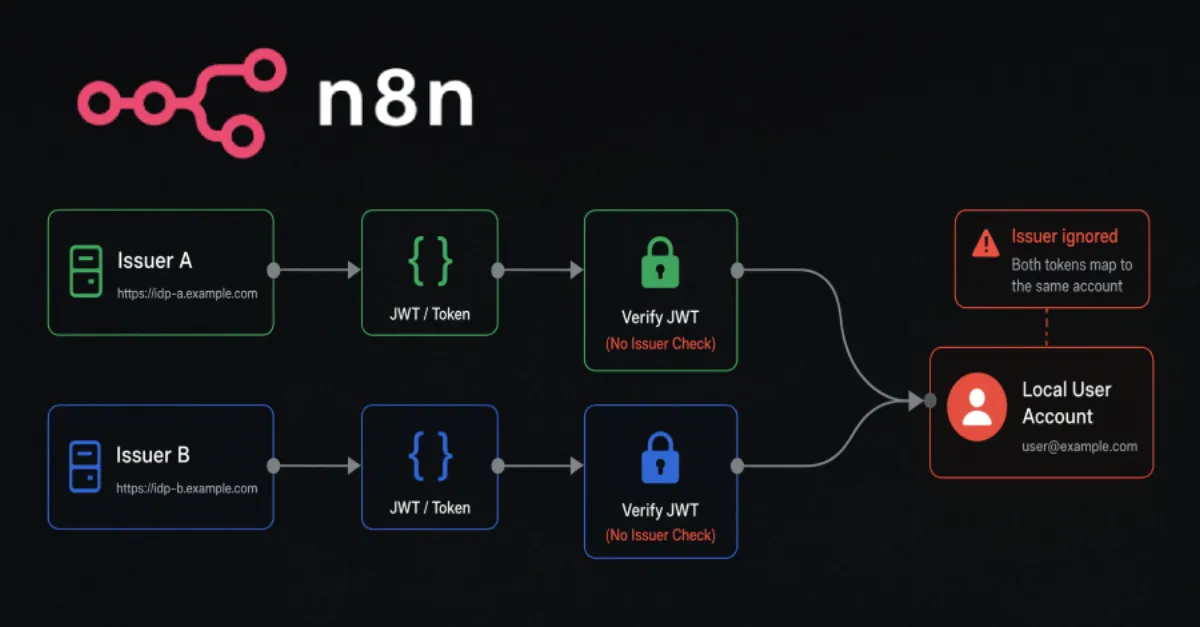
n8n, the popular open-source workflow automation platform, has been found to contain a critical vulnerability in its token exchange mechanism. The flaw allows an attacker to exchange a token from one identity provider and use it to log in as a user from an entirely different issuer, potentially granting unauthorized access to sensitive automation workflows and connected systems.
Token exchange is a common process in OAuth and similar protocols where a client swaps one type of token for another. In this case, n8n’s validation of the token’s issuer (the ‘iss’ claim) appears to be insufficient, enabling a malicious actor with a valid token from any allowed issuer to impersonate a user from a different source. This effectively breaks the isolation between authentication providers and can lead to full account takeover.
For website owners and hosting providers, the risk is amplified because n8n is frequently integrated with content management systems, databases, and cloud services. An attacker who gains access to an n8n instance could manipulate WordPress posts, trigger email campaigns, or modify DNS records through connected services. In multi-tenant hosting environments, such a flaw might allow cross-user access if n8n is used to manage multiple client sites.
The immediate mitigation is to upgrade n8n to the latest version that addresses the token validation logic. Administrators should also audit OAuth configurations, ensure strict issuer matching is enforced, and review logs for any suspicious login activity originating from unexpected providers. Disabling unused identity providers can further reduce the attack surface.
For businesses running n8n alongside WordPress, managed hosting platforms like AEU Hosting proactively apply security patches and monitor for unusual authentication patterns, reducing the window of exposure to such vulnerabilities. Keeping all automation tools up to date remains the first line of defense. Anyone using n8n should treat this as an urgent fix and verify that their instance no longer accepts tokens from untrusted issuers.