
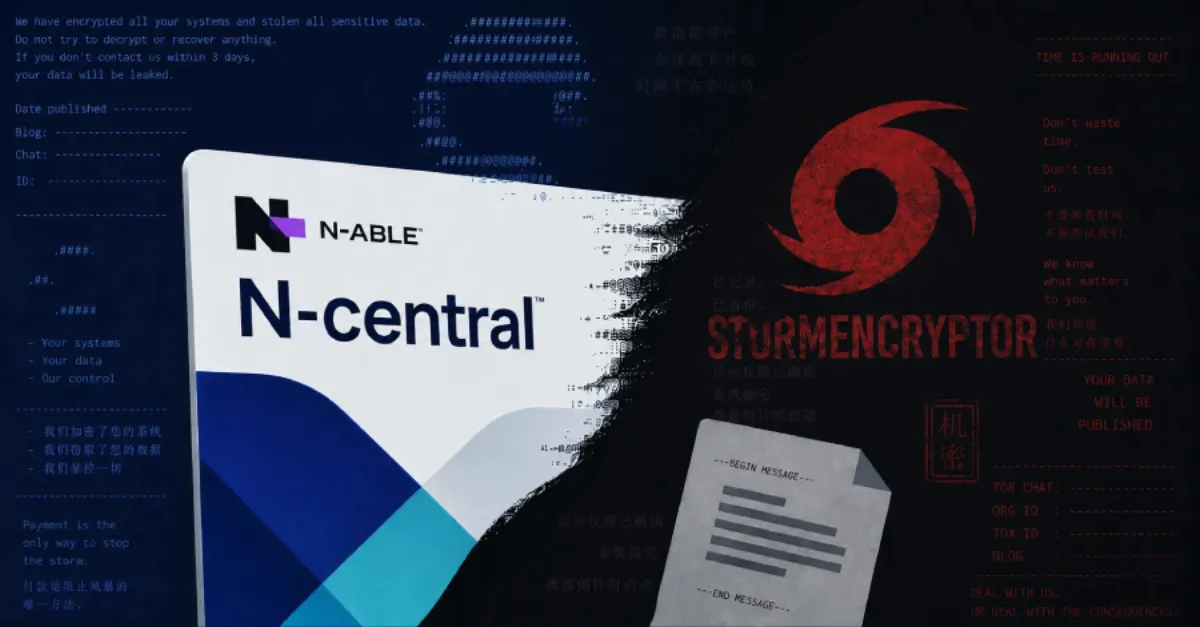
China-Tied Attackers Push StormEncryptor Ransomware Through Suspected N-central Security Hole
A newly identified ransomware called StormEncryptor is being deployed by a China-linked hacking group, likely by exploiting a flaw in the N-central remote management platform. Website owners and IT teams should check the…
A new ransomware strain named StormEncryptor has been linked to a China-based hacking group and is likely being distributed through a security weakness in N-central, a remote monitoring and management tool used by many IT service providers. The discovery, reported by cybersecurity researchers, highlights the growing danger of attackers targeting the very tools that IT teams rely on to manage and secure customer systems. N-central allows managed service providers (MSPs) to remotely monitor, update, and troubleshoot computers and servers for multiple clients from a single console. If attackers can compromise that console or exploit a vulnerability in the software, they can potentially push malicious code, such as ransomware, to every customer network managed by that provider.
Ransomware is a type of malicious software that locks or encrypts a victim's files, making them unreadable until a ransom is paid, usually in cryptocurrency. StormEncryptor appears to follow this model, encrypting data and demanding payment for the decryption key. The exact details of how StormEncryptor operates, such as the ransom amount or the encryption method, were not provided in the source, but the name suggests a focus on aggressively scrambling files across a network. For website owners and businesses, ransomware attacks are especially devastating because they can take down websites, corrupt databases, and halt operations for days or weeks.
The likely attack vector is a flaw in N-central. A software flaw, or vulnerability, is a mistake in the code that attackers can exploit to gain unauthorized access or run commands. N-central is a powerful tool because it has administrative access to many computers at once. This makes it an attractive target: a single vulnerability can let an attacker jump from one compromised MSP to dozens or hundreds of its customers. The source does not specify the exact vulnerability or whether a patch is available, but the phrase "likely via N-central Flaw" indicates that researchers suspect the attackers used an unpatched weakness in the software to install StormEncryptor. The China-linked attribution suggests a well-resourced group, but the immediate concern for IT teams is not the attacker's nationality but the fact that a widely used management tool has been abused.
For website owners who do not use N-central directly, the risk still exists. Your hosting provider or IT vendor may use remote management software like N-central to maintain your server or website backend. If that provider is compromised, ransomware could be pushed to your website or server without any direct action on your part. This is why supply chain attacks, where attackers target a service provider to reach many customers at once, have become a major concern in cybersecurity. A compromised management tool can bypass traditional defenses because the malicious activity appears to come from a trusted administrator.
To reduce the risk from this and similar threats, it is essential to keep all remote management and IT administration tools up to date with the latest security patches. If your organization uses N-central or any similar platform, apply updates immediately and verify that no unauthorized accounts or tasks have been created. Businesses that lack the time or expertise to constantly monitor these tools can benefit from security-first IT services such as AEU-I, which provides infrastructure management and consulting to help identify and close vulnerabilities before attackers can exploit them. Regular, offline backups are also critical: if ransomware does strike, having a clean backup allows you to restore your website and data without paying the ransom.
This incident serves as a reminder that ransomware operators are increasingly targeting the software supply chain and management infrastructure. Instead of attacking websites one by one, they look for a single weak point that gives them access to many victims at once. By staying informed about threats like StormEncryptor and taking proactive steps to secure remote management tools, website owners and IT teams can significantly lower their exposure to these costly attacks.
How to Protect Yourself
- If your company or IT provider uses N-central or any remote management tool, ask them to install the latest security updates immediately.
- Make regular backup copies of your website files and databases, and store at least one copy offline or on a separate service so you can restore if ransomware hits.
- Use strong, unique passwords and turn on two-factor authentication for any account that controls your website, server, or management tools.
- Monitor your website and server for unexpected changes, such as new admin accounts, unknown files, or sudden encryption of content.
- If you receive a ransom demand or notice your files are locked, disconnect the affected computer or server from the internet and contact a professional before paying anything.