
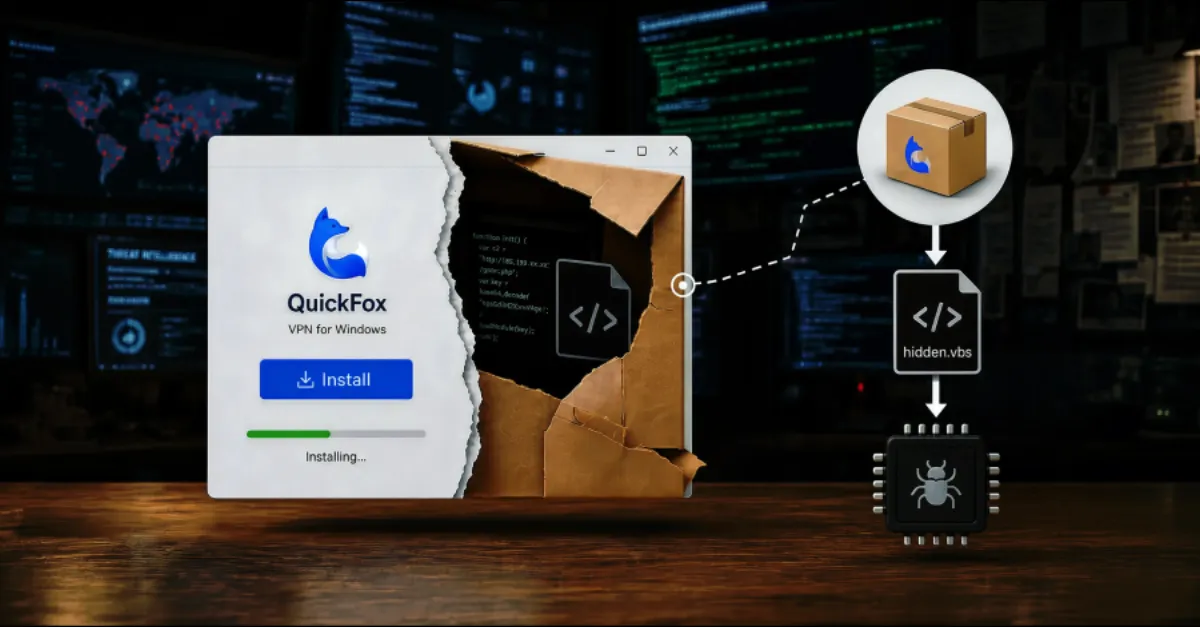
Trojanized QuickFox Installer Spreads FDMTP Backdoor in Supply Chain Attack
A compromised QuickFox software installer is distributing the FDMTP backdoor, putting users who downloaded it at risk of remote system takeover.
A new supply chain attack has surfaced involving QuickFox, a widely used software application. According to a report, threat actors managed to tamper with the official Windows installer for QuickFox, embedding a malware backdoor called FDMTP. Users who downloaded and executed this trojanized installer unknowingly gave attackers a foothold on their computers.
To understand what happened, it helps to first grasp what a supply chain attack is. Instead of directly breaching a target's network, attackers infiltrate the development or distribution process of a trusted software vendor. By compromising the software before it reaches users, they can bypass many security defenses because the malicious code arrives signed by a legitimate certificate and appears to come from a reputable source. This technique was previously seen in high-profile incidents like the SolarWinds breach, and now QuickFox has become a vehicle for similar abuse.
The term trojanized means that the installer file appears to be the genuine QuickFox setup program, complete with the expected user interface and functionality. However, hidden inside it is additional code that performs malicious actions. In this case, that extra code is the FDMTP backdoor. A backdoor is a piece of malware that allows remote attackers to secretly access and control an infected system—bypassing normal authentication—usually to steal data, install more malware, or move laterally within a network. The name FDMTP likely refers to the specific commands and communication methods this backdoor uses, though technical details are still being analyzed.
The impact can be severe. Once the FDMTP backdoor is active, attackers can execute commands, browse files, capture keystrokes, and exfiltrate sensitive information. For website owners and businesses, if the infected machine is used to administer web servers, content management systems like WordPress, or cloud infrastructure, the attacker could obtain administrative credentials. That could lead to website defacements, data breaches exposing customer information, or even a full takeover of the hosting environment. Even casual users face risks such as stolen financial data or ransomware deployment.
At this time, it is not clear which specific versions of the QuickFox installer were affected or for how long the compromise lasted before being detected. Users who installed QuickFox during the window of compromise are advised to assume their systems are infected and take immediate action. QuickFox has likely released an official statement and a clean updated installer, but verification is essential. Meanwhile, security researchers are actively reverse-engineering the FDMTP payload to understand its full capabilities and command-and-control infrastructure.
For those responsible for maintaining IT infrastructure, this incident underscores the importance of rigorous software validation. Services like AEU-I—a security-first IT and consulting service—can assist by implementing application allowlisting, continuous endpoint monitoring, and strict software update policies that detect anomalous behavior even from trusted programs. This helps catch such stealthy threats before they cause damage. However, individual users must also adopt safer habits to reduce their exposure to supply chain attacks. Always verify the integrity of downloads by checking digital signatures and hashes provided by the vendor. Keep antivirus and endpoint detection software up to date, as they may eventually recognize the FDMTP backdoor. Consider using a dedicated, limited-privilege user account for daily tasks so that if malware runs, it cannot easily gain full control of the system. Finally, maintain offline backups of critical data to recover without paying a ransom if hackers strike.
It is a sobering reminder that even software we trust can be turned against us. Vigilance and a layered security approach remain essential.
Si të Mbroheni
- If you have installed QuickFox recently, immediately run a full scan with your antivirus software and follow any alerts it gives.
- Only download software directly from the official vendor’s website, and check the website URL carefully for slight misspellings or impostor domains.
- Before running any installer, right-click the file, select Properties, and look for a digital signature tab—confirm it is signed by the legitimate company and hasn’t been tampered with.
- Use a standard user account for daily work instead of an administrator account, so malicious software has limited ability to make system changes.
- Keep your operating system and all security software set to update automatically to protect against newly discovered threats.
- Regularly back up important documents and website files to an external hard drive or cloud service disconnected from your PC, so you can restore them even if ransomware encrypts your data.